School of Economic Development

Driving sustainable and equitable economic transitions


About

The School of Economic Development (SED) at IIHS focuses on sustainable and equitable economic transitions across human settlements, through practices embedded in social, political, and ecological relationships.

The SED prioritises space and place, people, institutions and infrastructure, in fostering economic change, and addressing inequality, informality, institutional capacities, and sustainability.

It works across the public–private spectrum of economic agents and draws on heterodox traditions of economic thought and enquiry, across geography, sociology, anthropology, and planning, including political economy, economic geography, regional science, public finance, development economics, labour geography, industrial sociology, political ecology, urban economics, and economic history.


In line with IIHS’ commitment to place-based research and practice from the Global South, SED’s thematics are informed by the challenges of social and spatial inequality, informality, social determinants of economic marginalisation, ecological stresses, and gaps in institutional, financial and regulatory capacities.
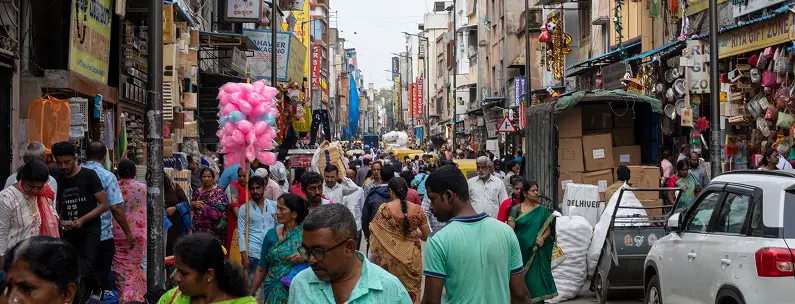
Where economies evolve, cities transform, and communities shape resilient futures.

Lorem ipsum dolor sit amet, consectetur adipiscing elit,

Million People
0
Projects
0 +
Publications
0 +
Citations
0 +
States
0
Programmes
0 +

Key Focus Areas

Seven areas of research and practice

Select an area to explore in depth

Urban and Regional Economic Development
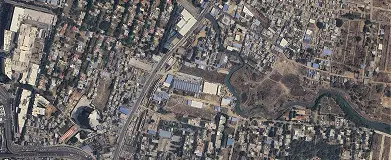
The SED provides critical inputs into the linkages between economic growth, urbanisation and planning, with inclusion 

economic-development-page-Land-and-Real-Estate

Land and Real Estate

The SED creates value through the integration of improved land and housing market functioning, infrastructure 

Housing

The SED looks at India’s affordable housing ecosystem, across demand and supply, planning, investment, and finance.

Transport and Mobility

The SED works towards shaping urban regions’ economic geographies, facilitating agglomerations, public–private 

Urban and Infrastructure Finance

The SED helps direct, inform and influence public and private investments, prioritising equitable and sustainable growth

Employment and Livelihoods

The SED looks at growth strategies for industrial and services sector development, improving the quality and conditions

Food Systems

The SED looks at diverse elements of urban food systems: livelihoods, consumption, value chains and markets

“ Our schools are not silos – they are lenses through which we examine, understand, and shape the urban future.”

Partners

Contact

School of Economic Development

Reach out to the School Office

Projects

Browse all projects associated with the School of Economic Development.

Publications

Access the School’s full publications through the Knowledge Gateway.

Quick links

Projects

Publications

People

GET IN TOUCH