
Practice
ON THIS PAGE
About
Shaping urban policy and practice through:
Key Focus Areas
Land and Real Estate
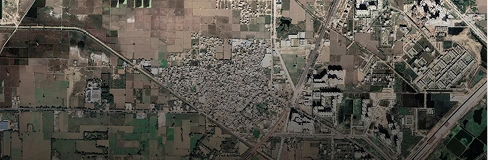
The IIHS Practice Programme’s work in the area of land and real estate aims to unlock the constraints current land governance arrangements in India present for urban planning, property markets, affordable housing, infrastructure development, tenure security and public finances.
- Legal and policy analysis:
Covers multiple aspects of land governance, including acquisition, development, regulation and transfer processes. It is grounded in an understanding of constitutional law, administrative and customary practice, and political economy. - Advisory support on land administration:
Supports various aspects of land administration spanning modernisation of land information systems and records, deployment of survey technologies, and the streamlining of registration and mutation services. - City- and state-level knowledge partnerships:
Collaborates with cities and states to support land development and management, to enable real estate and infrastructure development, affordable housing and public finances.
Aligned with: IIHS School of Governance.
Land governance: Across a third of India
The Programme has worked across the rural, peri-urban and urban continuum on land and real estate systems in 11 states and a dozen million-plus cities, including Bengaluru, Chennai, Delhi and Mumbai. It established a knowledge partnership with the All India Forum for Real Estate Regulatory Authorities (AIFORERA) in 2017 and has been a knowledge partner to the Government of India’s Department of Land Resources and Ministry of Housing and Urban Affairs.
Housing
The IIHS Practice Programme’s work in housing integrates planning, social sciences and building science to develop and strengthen India’s affordable housing ecosystem.

- Policy advice, programme design and implementation strategy development:
Provides strategic inputs on themes spanning affordable housing, rental housing, and slum upgrading, addressing exclusions and vulnerabilities, legal and regulatory complexities, institutional arrangements and roles, and market development possibilities. - Monitoring and evaluation:
Assesses public programmes, including conducting post-occupancy evaluations, to inform policy development and improve implementation at the state level. - Policy integration:
Supports integrating affordable housing with city-wide planning, transportation systems, and financing practices and instruments. - Building design and retrofit:
Collaborates with government and industry partners to enable the adoption of sustainable technologies and practices.
Aligned with: IIHS School of Systems & Infrastructure
and IIHS School of Human Development.
Shifting housing policy
The Programme helped draft the Karnataka Affordable Housing Policy, 2016
and Karnataka Slum Areas Development Policy, 2016, provided analysis and recommendations for drafting the model National Rental Housing Policy and the slum upgradation strategy of the Odisha Liveable Habitat Mission, and studied tenure security for slum dwellers in Delhi, and contributed to Pradhan Mantri Awas Yojana (PMAY) 2.0 discussions
Sustainable buildings
The IIHS Practice Programme’s work in the area of sustainable buildings is aimed at harnessing advanced technologies and innovations and fostering multi-stakeholder collaborations for achieving sustainable building design and net-zero building performance at scale.

- Policy analyses:
Provides insights into the institutional strategies and financing instruments needed to drive the sustainable buildings ecosystem, seeking to facilitate innovative practices that support energy-efficient design and construction. - Facilitation of multi-stakeholder collaborations:
Brings together academia, students, industry partners from real estate, manufacturing, and incubation, energy and real estate regulators, and practitioners, enabling innovation, creating pathways for policy change, influencing industry practices and developing a future-ready workforce. - Technology development and testing, and building performance assessments:
Including sustainable building design, energy and thermal audits, life cycle assessments, and the development of intelligent operating systems to ensure thermal comfort, optimising energy use, and minimising operational costs. The 54-acre IIHS, Kengeri Campus in Bengaluru serves as a testing ground for these innovations.
Aligned with: IIHS School of Systems & Infrastructure
World’s largest net-zero building challenge
The Programme co-manages SDI
, the world’s largest net-zero building design challenge. It engages students across the country in finding creative and viable solutions to real-world building challenges.
Water and Sanitation
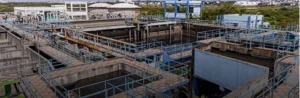
The IIHS Practice Programme’s work in the area of water and sanitation has influenced national and international public policy and institutional stances, and implementation models to deliver inclusive and sustainable services across urban and rural areas.
- Development of city- and state-level strategies and action plans:
Develops strategies and action plans to achieve inclusive and sustainable water and sanitation outcomes and support capacity development. - Technical and programme management support:
Provides support to implement and demonstrate service delivery models that are environmentally sound, financially viable and institutionally feasible at scale. - Design and implementation of community-level initiatives:
Focuses on ensuring high-quality, affordable services to the urban poor, and safety, dignity, voice and livelihood options for sanitation workers. - Global policy:
Contributes to redefining approaches to the governance and economics of water.
Aligned with: IIHS School of Systems & Infrastructure, IIHS School of Environment & Sustainability, IIHS School of Human Development.
TNUSSP: Impact at scale
The Programme anchored one of the world’s largest SDG-6-focused urban interventions, the Tamil Nadu Urban Sanitation Support Programme (TNUSSP), which enabled the scaling-up and operationalisation of faecal sludge management (FSM) solutions across 650 cities and towns of Tamil Nadu, touching 18 million lives.
Solid Waste Management
The IIHS Practice Programme’s work in the area of solid waste management supports cities and communities in safe, efficient and sustainable waste management.

- City-level strategies and action plans:
Develops comprehensive city-level strategies and action plans for cities to realise improved and sustainable waste management outcomes and the transition to a circular waste economy. - Technical and programme management support:
Demonstrates environmentally, financially and institutionally feasible delivery models at scale. - Design and implement community-level initiatives:
Designs and implements initiatives to empower communities and waste workers, ensuring high-quality, affordable waste management services for the urban poor. - Multi-stakeholder collaborations:
Facilitates carefully designed multi-stakeholder collaborations to influence policy, enable innovation and shape improved urban waste management practices.
Aligned with: IIHS School of Systems & Infrastructure
Building bottom-up impact
The Programme’s work in Karnataka has enabled more than 20 cities to plan for legacy waste bioremediation, improve collection and transportation systems, handle construction and demolition waste, and manage and process waste more responsibly and efficiently.
Energy
The IIHS Practice Programme helps accelerate a clean and just energy transition by identifying practice–policy opportunities, addressing capacity gaps and constraints, and aligning aspects of energy and climate policy, technology and behaviour change.

- Energy transition assessments:
Conducts assessments on energy transitions at global, national, regional, city and household levels, taking into account the economic, social and governance dynamics that influence energy transitions. - Policy and financing options:
Designs policy frameworks and financing strategies to support large-scale energy transition pathways, with a focus on the interconnected dynamics of urban, climate and energy transitions. - Community-level initiatives:
Supports the design and implementation of community-level initiatives aimed at enabling universal energy access and promoting just energy transitions.
Aligned with: IIHS School of Systems & Infrastructure
Just energy transitions
The Programme’s cross-country work on Reconfiguring Energy for Social Equity (ReSET) reimagines urban energy transitions that deliver economically and socially just outcomes, and highlights the importance of policy rules and financial innovation in achieving them.
Transport and Mobility
The IIHS Practice Programme’s work on transport and mobility supports transit and transit-oriented development (TOD) for economic and social value generation. Drawing on expertise in planning, institutional development, affordable housing, capacity building, gender and inclusion, stakeholder engagement, and a strong academic and research network, it works to support the design and implementation of urban transport systems and catalyse innovation.

- Place-based assessments for urban planning:
Undertakes comprehensive place-based assessments to inform evidence-based urban mobility planning. - TOD and multi-modal integration (MMI):
Provides technical assistance for TOD and MMI, focusing on aspects of urban planning, governance and value generation.
Aligned with: IIHS School of Systems & Infrastructure , IIHS School of Economic Development, , IIHS School of Human Development
Support for India’s largest metro projects
The Programme is involved with the Bengaluru Metro Rail: Supporting integrated and sustainable urban development along the blue line metro corridor, as well as providing transit-oriented development advisory for Delhi–Haryana RRTS on affordable housing.
Food Systems and Ecosystem Services
The IIHS Practice Programme’s work on food systems and ecosystem services explores the relationship of sustainable food systems, ecosystem services and biodiversity conservation, with urban food security, sustainability and resilience.

- Advisory support:
To governments on managing natural and managed ecosystems across diverse environments, from wild landscapes to metropolitan areas. - Monitoring and evaluation:
Conducts monitoring and evaluation of key ecological systems and nature-based solutions, providing a basis for effective and viable ecosystem management. - Community-level initiatives:
Designs and implements community-level initiatives to strengthen the management of land and aquatic ecosystem services. - Multi-stakeholder collaboration:
Facilitates carefully designed multi-stakeholder collaborations on urban agriculture and biodiversity conservation.
Aligned with: IIHS School of Environment & Sustainability
World’s first megacity Long-Term Urban Ecological Observatory
IIHS has established the first Long-Term Urban Ecological Observatory (LTUEO) in a megacity, at the 54-acre IIHS, Kengeri Campus in Bengaluru. A range of crops, nature-based solutions, and water and biodiversity conservation measures are being implemented and monitored to enable learning, innovation and impact.
Climate and Sustainability
The IIHS Practice Programme’s work in the area of climate and sustainability focuses on understanding and addressing climate challenges across regional, national and global scales. It has shaped global and local responses to climate change, and charted policy, financing and implementation pathways to address climate change at scale.

- Assessments of climate challenges:
Undertakes comprehensive assessments of climate challenges and actions at the global, national, regional and city scales, based on the most advanced climate, sustainability and urban science. - Development of high-feasibility, location-specific strategies:
Balances planning and social policy actions, grey and physical infrastructure investments, and nature-based solutions, with the aim of implementing system transitions and climate-resilient development pathways across urban and rural areas. - Policy, financing and implementation options:
Develops policy and financing options for aligning climate, economic and human development goals, realising resilient infrastructure and ecosystem services, and better management of physical and transition risks.
Aligned with: IIHS School of Environment & Sustainability
Local to global climate policy impact
IIHS has one of the largest concentrations of IPCC authors in a South Asian institution, contributing to major IPCC reports, such as AR5 Climate Change 2014: Impacts, Adaptation, and Vulnerability and Climate change 2023: Synthesis report of the IPCC sixth assessment report (AR6), as well as Paris Climate Agreement negotiations and key derivative outputs like the Summary for Urban Policymakers (SUP) and the report on scaling up climate finance in the context of COVID-19.
In India, regional and city-level assessments and implementation strategies cover semi-arid regions in Karnataka, Maharashtra and Tamil Nadu, along with over 15 cities across 8 states.
Urban Risk and Resilience
The IIHS Practice Programme’s work in the area of urban risk and resilience is aimed at enabling a sharper understanding of disaster and climate risks, and building capacities and infrastructure to address such risks. It helps plan and develop resilient infrastructure, buildings, and economic, social and institutional systems—from the regional to the global scale.

- Disaster risk and preparedness and post-disaster assessments:
Conducts disaster risk and post-disaster assessments at the global, national and city scales. These assessments recognise risk as a manifestation of vulnerability, hazard exposure, and capacity and infrastructure deficits. - Development of risk reduction strategies:
Develops strategies, prepared at various scales, focused on improving institutional and community capacities and resilient infrastructures and livelihoods. - Disaster financing:
Strengthens intergovernmental financing and implementation frameworks. - Institutional designs and appraisals:
Undertakes institutional designs and appraisals to establish and evaluate flagship international disaster risk and resilience institutions and programmes. - Community strengthening:
Designs, develops and implements community strengthening initiatives to support communities in leadership development, interfacing with disaster preparedness and response systems, voice strengthening, and the identification of resilient infrastructure and building technology options.
Aligned with: IIHS School of Environment & Sustainability , IIHS School of Human Development
Assessing and addressing systemic risk across global and local scales
Globally, the Programme’s work has informed the Global Assessment Reports (GAR) on Disaster Risk Reduction since 2009 and the Global Infrastructure Resilience: Capturing the Resilience Dividend
(part of IIHS’ engagement with the Coalition for Disaster Resilient Infrastructure (CDRI)).
In India, the Programme’s work spans a dozen states and cities and includes risk assessments, preparedness and response systems, post-disaster recovery, and strategies for building institutional and community capacities.
Urban and Infrastructure Finance
The IIHS Practice Programme’s work on urban and infrastructure finance helps direct, inform and influence public and private investments in the sectors, prioritising equitable and sustainable growth, municipal empowerment and infrastructure resilience.

- Strategic support for governments:
Assists national and state governments in structuring urban, municipal, and infrastructure finances. - Financing assessments:
Assesses urban, public, climate-resilient infrastructure financing, contributing to institutional reforms and facilitating high-impact investment. - Policy and advisory support:
Offers policy support to leverage existing and emerging financing mechanisms across the urban and sustainable development spectrum.
Aligned with: IIHS School of Economic Development , IIHS School of Governance
All India and state-specific financing
The Programme, through its support to the K. C. Sivaramakrishnan Expert Committee to study the alternatives for a new capital for the state of Andhra Pradesh, supported state-wide development and infrastructure financing in Andhra Pradesh. It also advised the Report to the XV Finance Commission: The Potential of Urbanisation to Accelerate Post-COVID Economic Recovery. Recent engagements cover state and city finances in 90 cities across 24 states and union territories.
Social Protection and Decent Work
The IIHS Practice Programme’s work in the area of decent work and social protection focuses on improving the quality of work and reimagining and designing social protection regimes for urban residents and informal workers.

- Policy development and programme design:
Focuses on enterprises and workers to improve the quality of employment for sustenance and growth, by engaging with questions around urban social protection. - Implementation strategy development and support:
Works with governments on designing and supporting large-scale systems for delivery of social protection, food security, health benefits and urban employment programmes. - Urban planning for informal work:
Focuses on designing and supporting place-based interventions for different forms of informal work in the city, including transit planning and other infrastructure and housing support.
Aligned with: IIHS School of Human Development , IIHS School of Economic Development.
India experience: Embedding decent work into urban spatial planning
The Programme has worked with the governments of Odisha and Rajasthan on policy frameworks to support informal work and workers. Its deep understanding of the spatial dimensions of the different sectors of informal work has integrated decent work into spatial planning frameworks of cities like Chennai, Delhi and Mumbai.
Partners
Contact
School of Economic Development
Reach out to the School Office
Links
Projects
Publications
EVENTS
IIHS Urban Policy Dialogues
Programme Office
For any inquiries or further information, please reach out to practice@iihs.co.in